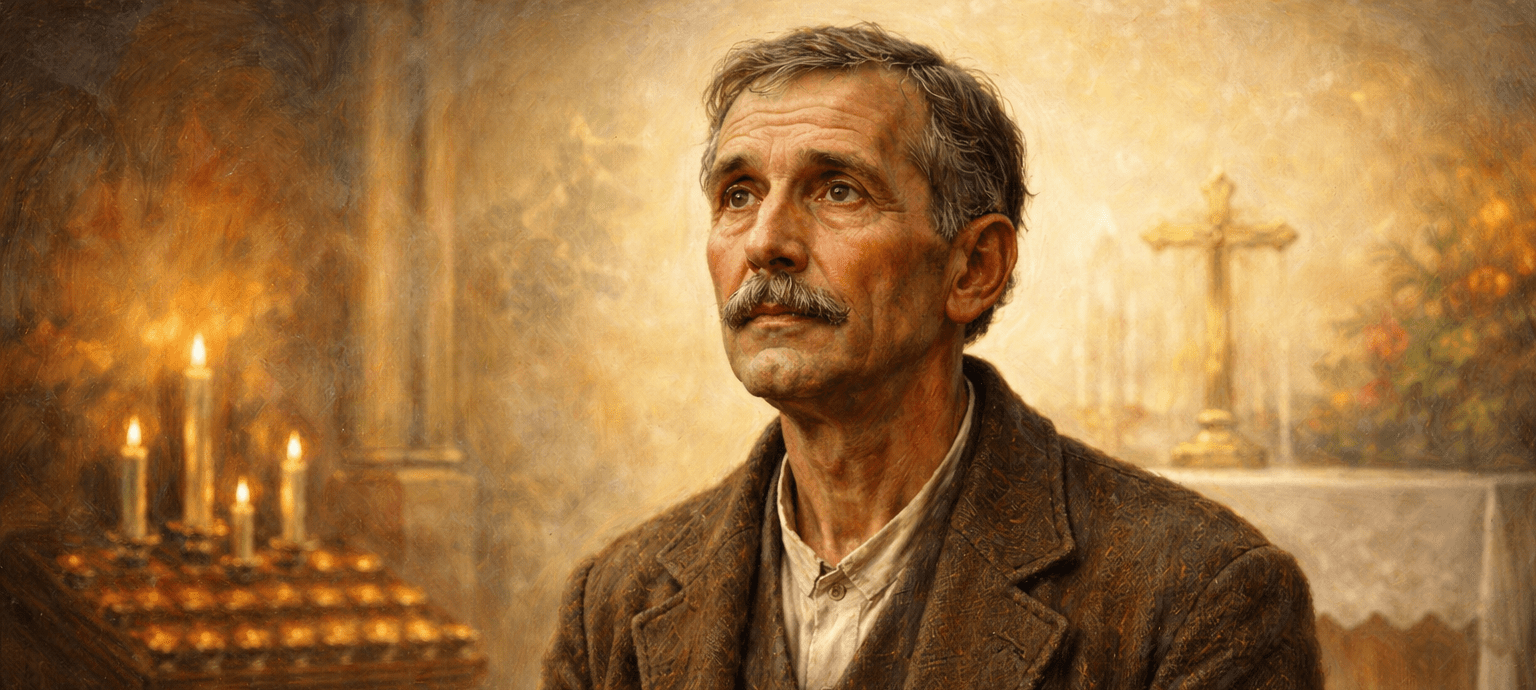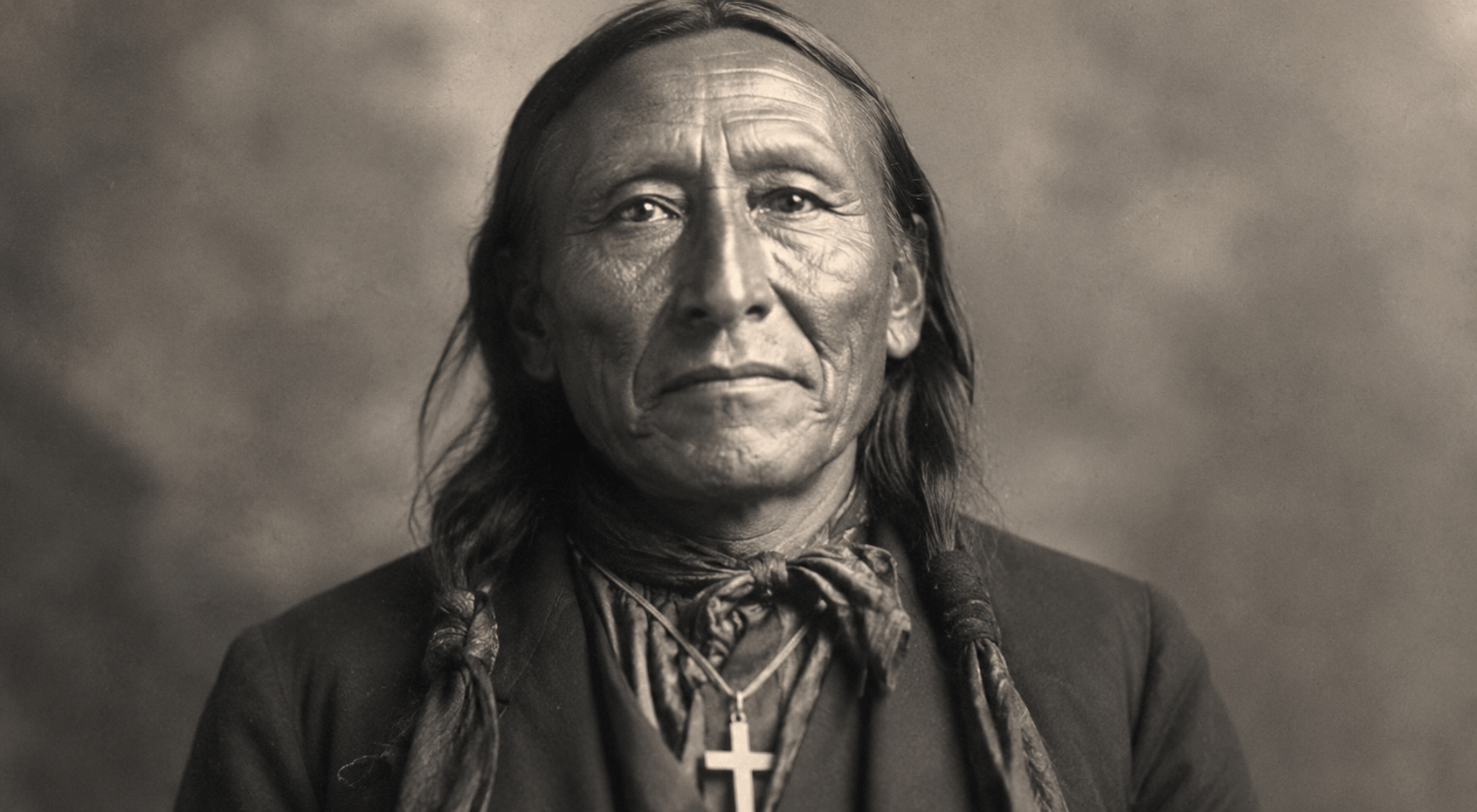
Few figures in modern Catholic history have inspired as much interest as Servant of God Nicholas Black Elk (1863–1950). Known to many through the classic book Black Elk Speaks, he is often remembered as a Lakota holy man, visionary, and witness to the tragic history of Native Americans in the nineteenth century. Yet what many people do not realise is that the second half of his life was devoted to Jesus Christ and to serving the Catholic Church as a lay catechist. Today, the Church is studying his life as a possible saint.
For Catholics interested in the vocation of the laity, Nicholas Black Elk offers a remarkable example of how one can remain deeply rooted in one’s own culture while becoming a faithful disciple and missionary.
A Childhood Marked by Upheaval
Nicholas Black Elk (Heḥáka Sápa) was born on 1 December 1863 near the Little Powder River in what is now Wyoming. He belonged to the Oglala Lakota Nation during one of the most turbulent periods in Native American history.
From an early age he experienced profound spiritual visions, which shaped his understanding of God, creation, and his responsibility towards his people. As a young boy he witnessed many of the defining events of the American West, including the Battle of the Little Bighorn in 1876 and later the devastating Wounded Knee Massacre in 1890, where hundreds of Lakota men, women, and children were killed. These experiences left lasting spiritual and emotional wounds.
Like many Native Americans of his generation, Black Elk struggled to understand how his people could preserve their identity while facing enormous political, cultural, and religious change.
Encountering the Catholic Faith
Black Elk’s first wife, Katie War Bonnet, became a Catholic, and together they had their children baptised. Following her death, Black Elk continued to explore Christianity.
On 6 December 1904—the feast of St Nicholas—he was received into the Catholic Church, taking the name Nicholas. He was then forty years of age. This decision was not a rejection of his people but the culmination of a long spiritual search for truth. Accounts from family members and contemporaries describe a catalytic moment shortly before his baptism: a confrontation with a Jesuit priest at the bedside of a sick child, which his daughter later likened to St Paul’s falling from his horse.
Those who knew him testified that he saw Christ as the fulfilment—not the destruction—of the deepest hopes contained within Lakota spirituality. He believed that the Gospel brought healing and unity while allowing him to remain authentically Lakota.
A Lay Catechist and Evangelist
After his baptism, Nicholas Black Elk dedicated the remainder of his life to sharing the Catholic faith.
For nearly fifty years he travelled throughout the Pine Ridge Reservation, often on horseback, teaching the faith, preparing adults and children for the sacraments, praying with families, and leading catechetical instruction.
Historians estimate that he personally helped bring more than 400 Native Americans into the Catholic Church through his witness and instruction. He became known for his devotion to:
- the Holy Eucharist
- the Sacred Heart of Jesus
- the Blessed Virgin Mary
- the Rosary
- daily prayer
- works of charity and reconciliation
Rather than abandoning his identity, Black Elk demonstrated that faithful Catholic discipleship could flourish within Lakota culture. His life anticipated what later Church documents would describe as the inculturation of the Gospel—allowing Christ to transform every culture from within while respecting what is true, good, and beautiful in that culture.
An Example of the Vocation of the Laity
For readers of Called2Mission, perhaps the most striking aspect of Nicholas Black Elk’s life is that he was not a priest or religious.
He was a husband, father, grandfather, neighbour, and respected elder. His principal ministry was exercised as an ordinary lay Catholic living among his own people.
His life illustrates several key principles of the lay vocation:
- Every baptised person is called to be a missionary.
- Evangelisation often begins through personal relationships.
- Holiness is possible in every culture.
- Lay catechists play an indispensable role in building the Church.
- Personal witness is often more powerful than formal preaching.
Decades before the teachings of the Second Vatican Council on the universal call to holiness, Black Elk was already living them.
A Cause for Canonisation
Interest in Black Elk’s Catholic life grew significantly after historians examined documents, letters, family testimony, and parish records that revealed how much of his life had been overlooked by earlier writers.
On 14 March 2016, his grandchildren—led by his eldest grandson, George Looks Twice—presented a petition bearing more than 1,600 signatures to Bishop Robert Gruss of the Diocese of Rapid City, requesting that his cause for canonisation be opened. The following year the United States bishops gave their approval by voice vote, and Bishop Gruss formally opened the diocesan investigation on 21 October 2017.
He now bears the title Servant of God, the first official stage in the Church’s canonisation process. The completed dossier—the positio—has been submitted to the Dicastery for the Causes of Saints in Rome, where the cause is now under active examination. Pope Francis is reported to have taken a personal interest in the cause.
If declared a saint, Nicholas Black Elk would become the first Native American man born in North America to be canonised by the Catholic Church. (St Kateri Tekakwitha, a Native American woman, was canonised in 2012.)
Questions and Controversy
Some scholars and Native American leaders have debated how to interpret Black Elk’s life.
Certain writers emphasise his Lakota spirituality and question whether his Catholic faith represented a complete conversion. Others argue that his continued appreciation of Lakota traditions shows an authentic integration of faith and culture rather than a divided identity.
Those promoting his cause point to extensive evidence from family members, missionaries, parish records, his own writings, and decades of faithful catechetical work. They argue that his Catholic commitment was sincere, lifelong, and deeply missionary. The Church’s investigation seeks to examine these questions carefully, relying on historical evidence and theological discernment.
Why Nicholas Black Elk Matters Today
Nicholas Black Elk speaks powerfully to the Church today.
In an age searching for authentic evangelisation, he reminds us that holiness does not erase culture but transforms it. He demonstrates that the Gospel can take root in every people and every nation without destroying what is genuinely human and good.
His witness is especially important for lay Catholics. Without ordination or public office, he became one of the most influential evangelists among his own people simply through faithful witness, humble service, and patient catechesis.
His life reminds us that the Church’s mission has always depended not only upon priests and religious, but upon ordinary lay disciples who take seriously Christ’s command:
“Go therefore and make disciples of all nations” (Matthew 28:19).
Whether or not Nicholas Black Elk is eventually canonised, his life already offers a compelling model of missionary discipleship—fully Lakota, fully Catholic, and fully committed to bringing others to Christ.