
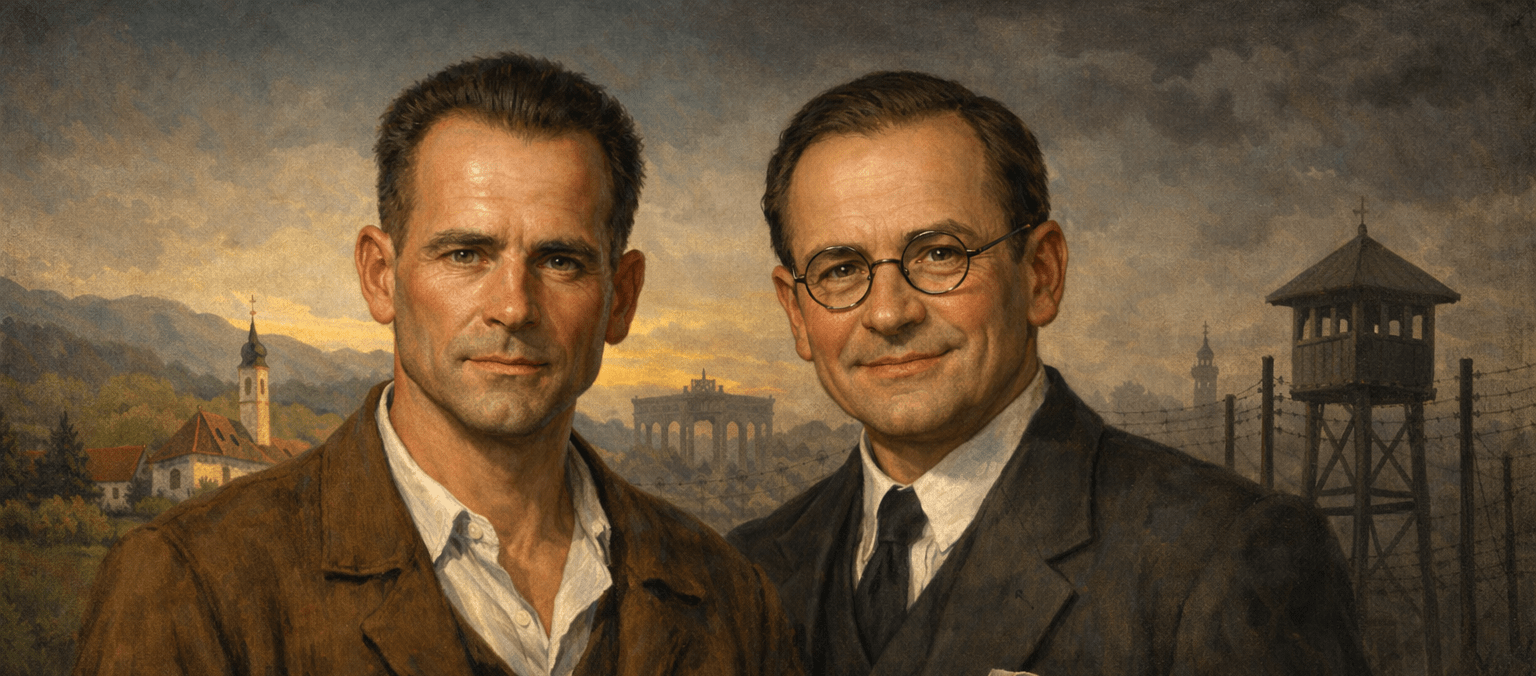
The twentieth century was marked by political upheaval, war, and ideologies that challenged human dignity and religious faith. In the midst of this darkness, God raised ordinary lay Catholics whose courage continues to inspire the Church today.
Blessed Franz Jägerstätter and Blessed Nikolaus Groß never met. They lived different lives, in different places, with different professions. Yet their witness tells one powerful story: holiness is possible in ordinary life, and the vocation of the laity includes transforming the world through faithful conscience.
Their lives speak directly to Catholics today — especially lay men and women seeking to live their faith authentically in society.
Ordinary Men, Extraordinary Fidelity
Franz Jägerstätter was a farmer in rural Austria, a husband and father who lived a quiet village life rooted in prayer and family.
Nikolaus Groß was a German miner turned journalist, deeply involved in Catholic workers’ movements and committed to promoting social justice through faith.
Neither was a priest or religious. Neither held Church authority. Both were laymen whose holiness grew through everyday responsibilities:
- marriage and family life,
- daily work,
- participation in parish and society,
- commitment to Catholic teaching.
Their sanctity emerged not from extraordinary circumstances but from ordinary fidelity.
When Faith Met Political Pressure
Both men lived under Nazi rule — a system demanding total loyalty and conformity.
Each faced a moment when faith and public expectation collided.
Franz Jägerstätter’s Choice
Franz was ordered to serve in Hitler’s army. After prayerful discernment, he concluded he could not participate in a war serving an unjust ideology. He refused military service, knowing it would cost him his life.
Nikolaus Groß’s Mission
Nikolaus resisted through his professional and social engagement. As a journalist and Catholic activist, he defended Christian values and human dignity, quietly supporting resistance efforts seeking a moral future for Germany.
Their paths differed, but their foundation was the same: obedience to God before human power.
Conscience Formed by Faith
Neither man acted impulsively or politically. Their decisions grew from deeply formed Christian consciences.
They prayed.
They studied their faith.
They sought to live the Gospel seriously.
In a time when many justified compromise for safety or survival, they recognised that conscience is not simply personal opinion — it is a response to truth.
Their witness reflects the Church’s teaching that lay people are called to sanctify the temporal order from within.
The Cost of Discipleship
Both men paid the ultimate price.
- Franz Jägerstätter was executed on 9 August 1943 for refusing military service.
- Nikolaus Groß was executed on 23 January 1945 for his involvement in resistance networks.
Each left behind a wife and children. Each chose fidelity to Christ over personal security.
Their martyrdom reveals a profound truth: discipleship sometimes requires sacrifice, but faithfulness is never wasted.
Two Complementary Models of Lay Holiness
Together, these blesseds show two essential dimensions of the lay vocation.
1. Personal Moral Courage — Franz Jägerstätter
He reminds us that every Christian must make personal decisions rooted in conscience, even when standing alone.
2. Social Engagement — Nikolaus Groß
He shows that lay Catholics are called to shape society through work, leadership, and commitment to justice.
One witness is quiet refusal.
The other is active engagement.
Both are authentic expressions of lay discipleship.
